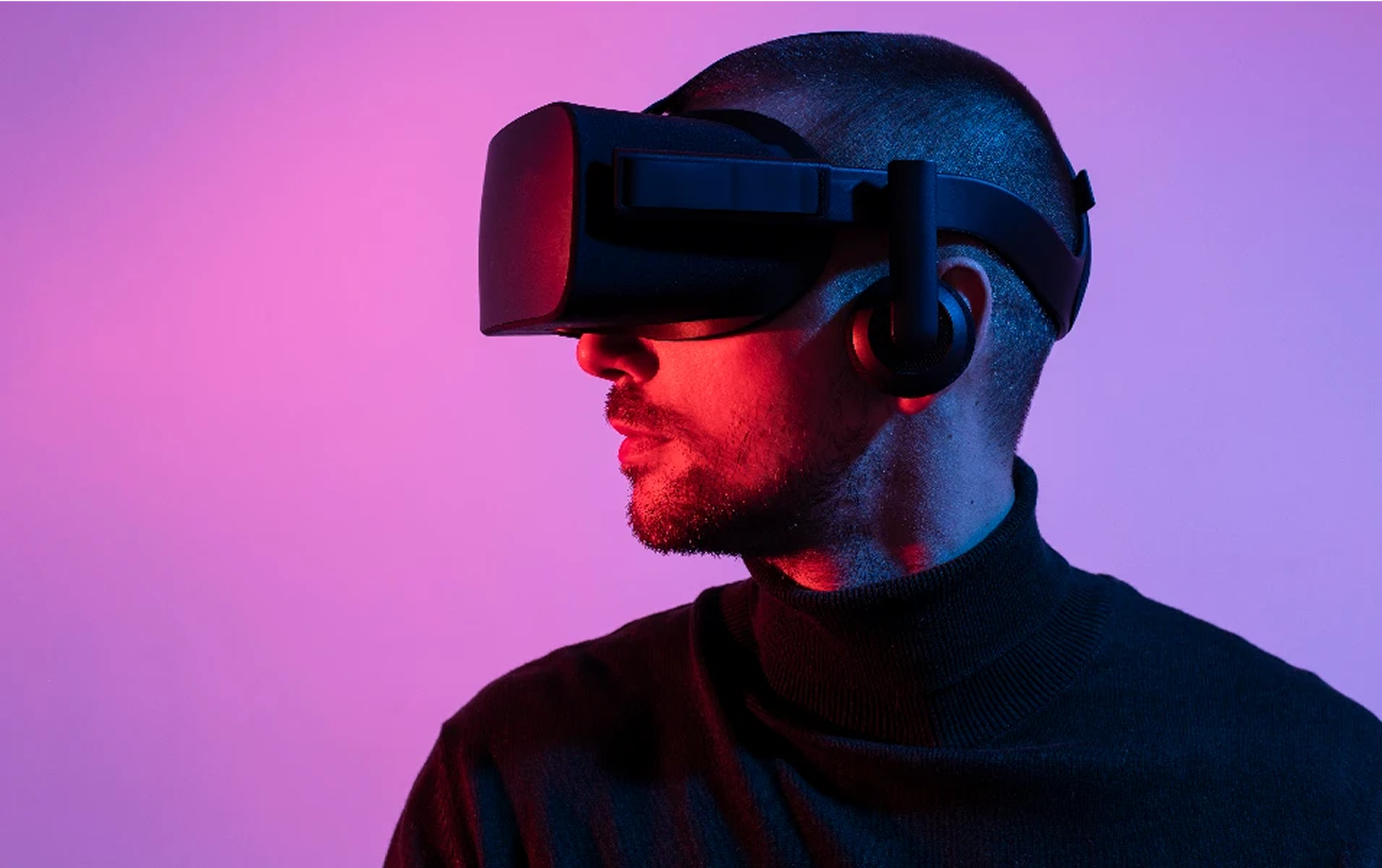
Brain-Computer Interface: Unlocking Direct Brain-to-Device Communication
Imagine navigating a complex virtual world, controlling digital avatars, or even operating a robotic arm, all with the power of your thoughts. This isn't science fiction anymore; it's the rapidly evolving reality of Brain-Computer Interfaces (BCIs). At its core, a BCI represents a revolutionary leap in human-machine interaction: a direct communication pathway forged between the intricate electrical activity of your brain and an external device. This profound technology promises to redefine our capabilities, offering unprecedented control and immersion, particularly within dynamic environments like virtual reality.
What Exactly is a Brain-Computer Interface?
A Brain-Computer Interface, often referred to interchangeably as a Brain-Machine Interface (BMI), is precisely what its name suggests: a direct link that bypasses conventional motor pathways to translate brain signals into commands for an external system. Unlike traditional interfaces that rely on physical movements – a mouse click, a joystick push, or a verbal command – BCIs tap directly into the brain's electrical symphony, allowing thoughts, intentions, or even imagined movements to become actions in the digital or physical world.
The primary objectives of BCI research are vast and impactful. They include:
- Assisting: Providing new avenues for communication and control for individuals with severe motor disabilities.
- Augmenting: Enhancing human capabilities beyond our natural limits, such as improved focus or faster reaction times.
- Repairing: Restoring lost functions, for instance, through neuroprosthetic limbs that can be controlled as naturally as biological ones.
- Mapping and Researching: Gaining deeper insights into brain function and cognition.
The journey of BCIs began surprisingly early. Groundbreaking research by Jacques Vidal at UCLA in the 1970s, backed by grants from the National Science Foundation and DARPA, laid the fundamental groundwork. Vidal's seminal 1973 paper was the first to introduce the term "brain-computer interface" into scientific discourse, setting the stage for decades of innovation. Learn more about the fascinating origins of BCI technology and its journey from early research to human implants.
Varieties of BCI: From Non-Invasive to Invasive
BCIs are broadly categorized by how closely their electrodes interact with brain tissue:
- Non-Invasive BCIs: These interfaces do not require surgery and typically involve external sensors placed on the scalp. Electroencephalography (EEG) is the most common example, measuring electrical activity through the skull. Others include Magnetoencephalography (MEG) and functional Magnetic Resonance Imaging (fMRI), though these are primarily research tools due to their size and cost. Non-invasive methods offer ease of use and safety but tend to have lower signal resolution.
- Partially Invasive BCIs: These require a minor surgical procedure to place electrodes either on the surface of the brain (Electrocorticography or ECoG) or within blood vessels near brain tissue (endovascular BCIs). ECoG, in particular, offers a balance between signal quality and reduced invasiveness compared to fully implanted devices.
- Invasive BCIs: These involve surgically implanting microelectrode arrays directly into the brain tissue. While they offer the highest signal fidelity and the potential for precise control, they also carry the risks associated with brain surgery.
Each type presents a unique trade-off between signal quality, invasiveness, and long-term stability, with ongoing research striving to maximize benefits while minimizing risks. Delve deeper into the different classifications and technological approaches in BCI development.
The Brain Behind the Interface: A Quick Look at Our Control Center
To truly appreciate the BCI, it's essential to understand the incredible organ at its heart: the human brain. Far from a simple blob of cells, your brain is the seat of consciousness, the orchestrator of every voluntary movement, and the silent regulator of countless nonconscious processes. It’s an organ of immense complexity, housing roughly 100 billion neurons that communicate through intricate electrical and chemical signals.
Consider some remarkable facts:
- The average person processes between 12,000 to 60,000 thoughts daily.
- Despite its power, the brain itself contains no pain receptors; headaches originate from nerves in the head, face, and neck.
- Crucially for BCI, the brain exhibits astonishing cortical plasticity. This means it can adapt and reorganize itself in response to new experiences or inputs. Signals from an implanted neuroprosthesis, after a period of adaptation, can be processed by the brain as if they were natural sensory or effector channels. This plasticity is what allows individuals to learn to control artificial limbs or virtual objects with their thoughts.
Different regions of the brain specialize in distinct functions. For instance, the frontal lobe, located directly behind the forehead, is pivotal. It's the largest lobe and plays a critical role in:
- Motor skills and planning movements.
- Speech and language production (housing Broca's area).
- Forming personality and maintaining motivation.
- Managing attention and understanding/reacting to the feelings of others.
When we talk about controlling a device or navigating a virtual environment with our thoughts, we're often engaging these very motor planning and attentional regions of the frontal lobe. By understanding and interpreting the specific electrical patterns generated during these cognitive processes, BCIs can translate intention into action.
Diving into the Virtual Frontier: BCI and VR
This brings us to one of the most exciting and transformative applications of BCI technology: its integration with virtual reality. The combination of a brain computer interface VR creates an unparalleled level of immersion and control, pushing the boundaries of what's possible in digital interaction.
Traditional VR experiences, while visually captivating, still rely on physical controllers, joysticks, or gestures. These methods, while effective, maintain a barrier between the user's direct intention and the virtual world. A BCI shatters this barrier. Imagine:
- Thought-Controlled Avatars: Instead of manipulating a joystick to move your avatar in a VR game, you simply think about moving forward, turning left, or jumping. The BCI interprets your motor cortex signals (even imagined ones) and translates them into in-game actions.
- Mental Navigation: Exploring virtual landscapes by merely focusing your attention on a destination or mentally indicating direction, making VR accessible and intuitive for users who might struggle with traditional controllers.
- Enhanced Immersion: The removal of physical input devices deepens the sense of presence. When your thoughts directly influence the virtual world, the line between reality and simulation blurs even further.
- Real-time Feedback: Future BCI VR systems could not only read your brain signals but also provide neurological feedback, potentially enhancing cognitive performance within the VR environment itself.
The synergy between brain computer interface VR isn't just about control; it's about a fundamental shift in how we interact with digital spaces. It promises to make VR more intuitive, more accessible, and profoundly more engaging.
Real-World Applications and the Future of BCI in VR
The marriage of BCI and VR extends far beyond just gaming and entertainment, although these are certainly exciting avenues. The potential applications are vast and transformative:
Therapeutic and Rehabilitative Uses:
- Phobia Treatment: Patients can safely confront fears in controlled VR environments, with BCIs potentially monitoring anxiety levels and adapting scenarios for optimal therapy.
- Motor Rehabilitation: Individuals recovering from strokes or injuries can practice controlling virtual limbs or performing tasks, with the BCI providing direct feedback to the brain, encouraging neural plasticity and recovery.
- Pain Management: Immersive VR experiences controlled by thought could distract patients and help manage chronic pain by shifting their mental focus.
Professional Training and Simulation:
- Surgical Training: Surgeons could practice complex procedures in VR with extreme precision, using thought to manipulate virtual instruments.
- Military and Aviation: Piloting drones or complex machinery in high-stress simulations, where rapid, intuitive thought-based control could be a game-changer.
- Skills Development: Learning new motor skills or complex procedures where direct neural feedback could accelerate learning.
Accessibility and Augmentation:
- Empowering Individuals with Disabilities: For those with severe paralysis, a brain computer interface VR offers a completely new way to interact with the world, granting them agency in digital spaces that mirror reality. This could range from virtual social interactions to job training.
- Cognitive Enhancement: Future systems might offer brain training games in VR, where the BCI provides neurofeedback to help users improve focus, memory, or reaction times.
While the vision is compelling, challenges remain. Achieving high accuracy and low latency for seamless control, developing user-friendly non-invasive BCI devices for VR, and addressing ethical considerations around privacy and data security are critical. As the technology matures, however, we are steadily moving towards a future where thinking will be the new clicking, and the virtual world will truly become an extension of our minds.
The potential for brain computer interface VR is immense, hinting at a future where our thoughts are the ultimate interface, blurring the lines between mind, machine, and reality in ways we are only just beginning to comprehend.
Conclusion
Brain-Computer Interfaces represent one of humanity's most ambitious technological endeavors, forging a direct neural bridge between our thoughts and external devices. From its pioneering origins in the 1970s to the sophisticated invasive and non-invasive systems of today, BCI technology is rapidly evolving, driven by our ever-deepening understanding of the brain's incredible plasticity and functionality. When paired with the immersive capabilities of virtual reality, the potential of a brain computer interface VR system expands exponentially. It promises not only to revolutionize how we interact with digital worlds, offering unparalleled control and immersion, but also to unlock new frontiers in therapy, training, and accessibility, empowering individuals and extending human capabilities beyond previous limits. The journey is ongoing, but the future of direct brain-to-device communication, particularly in virtual environments, is undeniably bright and transformative.